
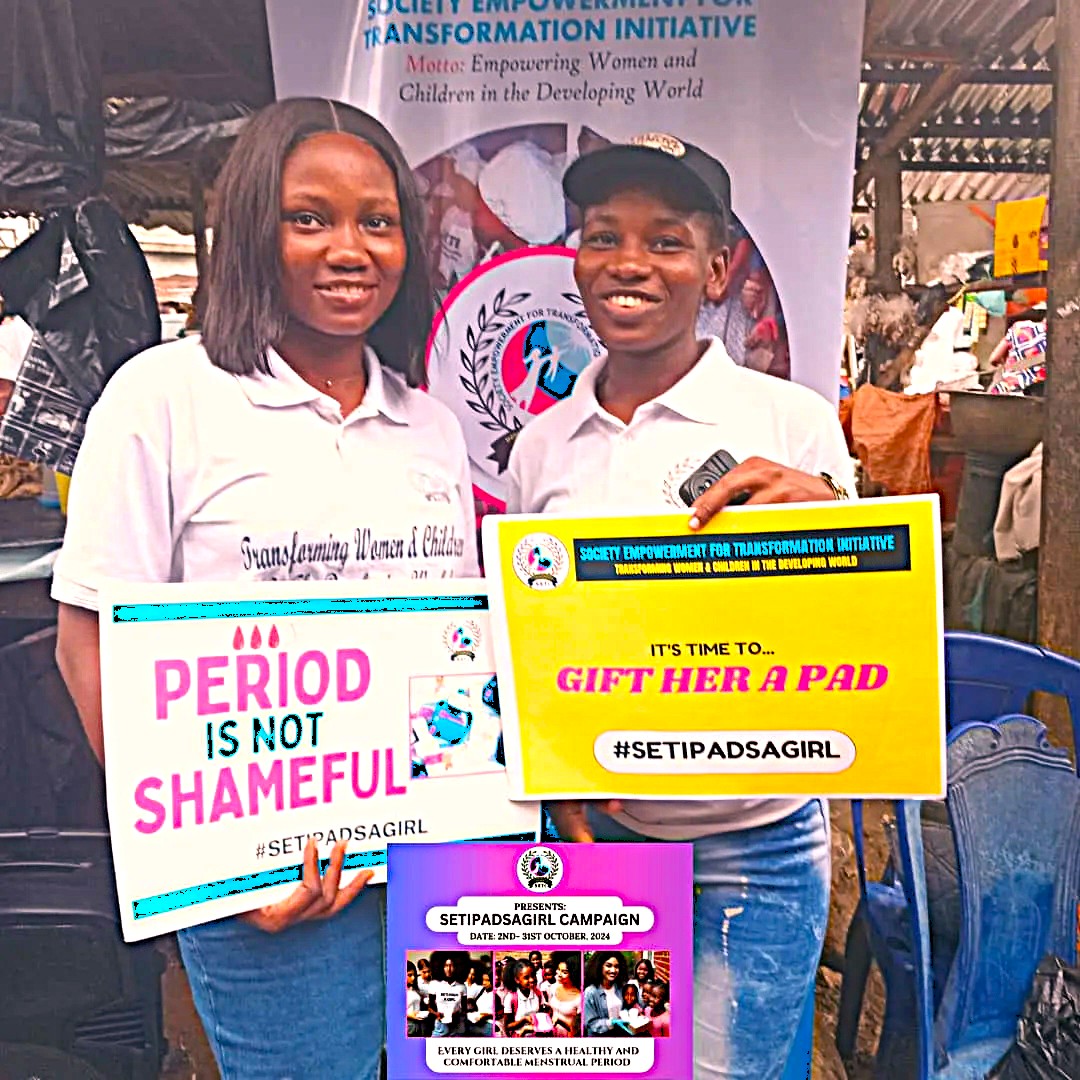
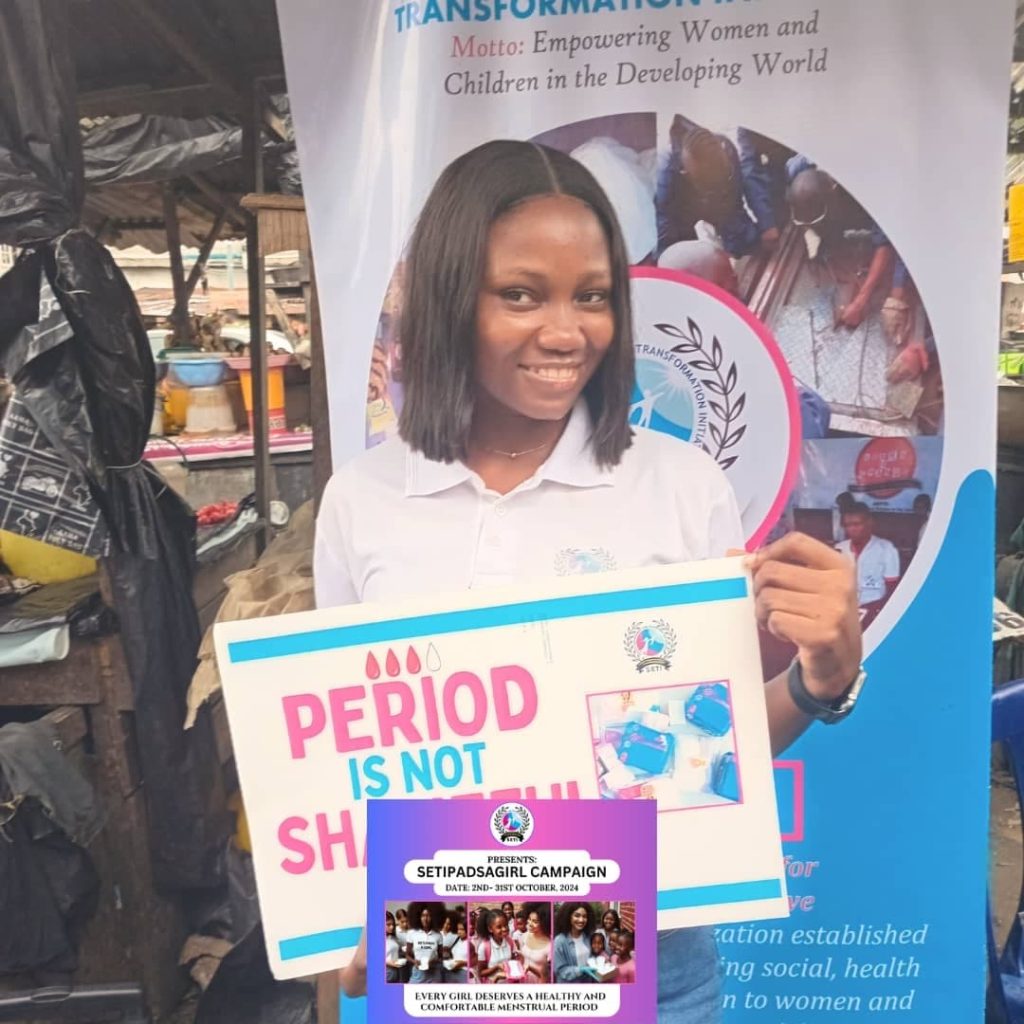
The Pad a Girl Program, spearheaded by the Society Empowerment for Transformation Initiative (SETI), is a targeted intervention designed to combat “period poverty” and the social stigmas that prevent women and girls from reaching their full potential. It is celebrated every year in October.
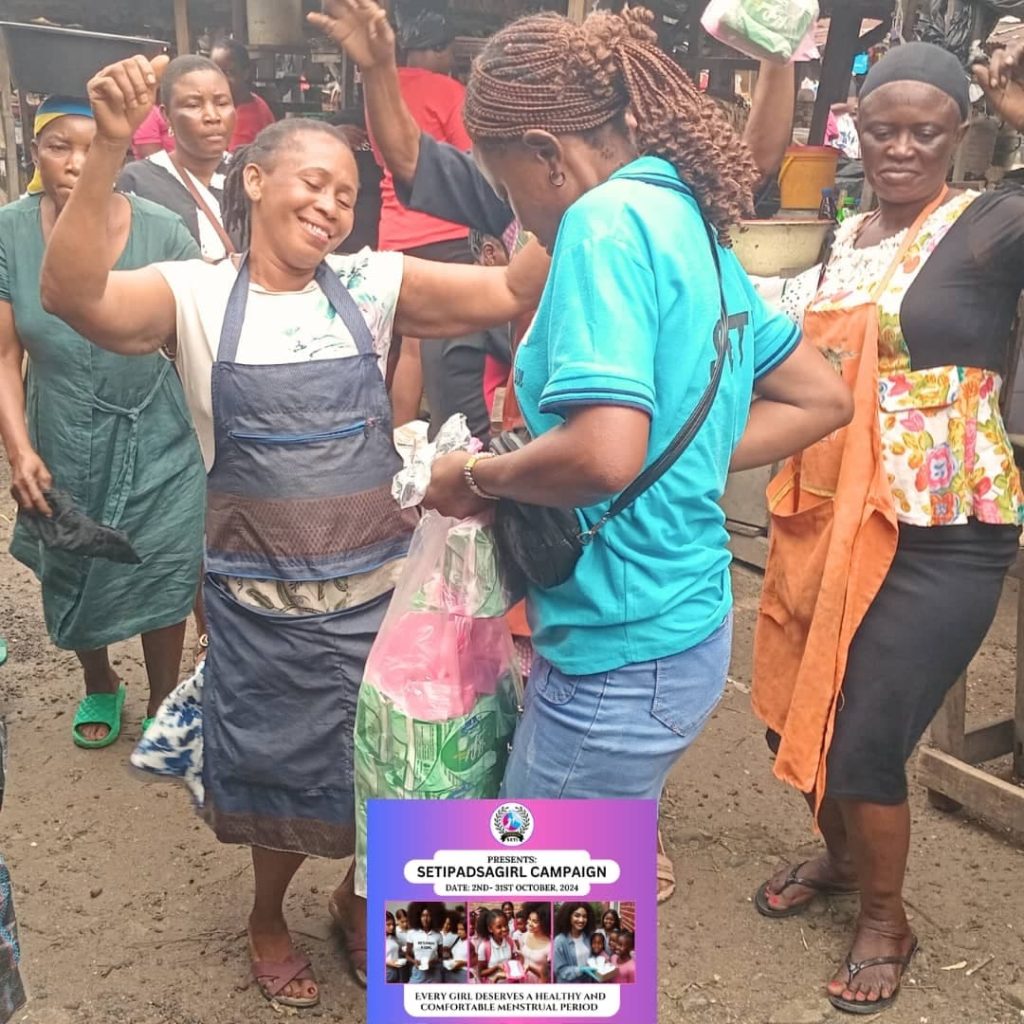
Because SETI operates on the principle that information is power, this program is not just a donation drive; it is a mobile educational platform that meets women and girls wherever they are ; in market squares, rural schools and community centers.
Core Components of the Program
The initiative is built on two inseparable pillars: Biological Power (Health) and Educational Power (Access).
1. Marketplace & School Outreach
SETI recognizes that many women in the marketplace and girls in rural schools lack access to formal health infrastructure. The program brings health experts directly to these hubs to conduct:
- Health Promotional Talks: Educational sessions that explain menstruation as a natural biological process, debunking cultural myths and taboos that often lead to shame or isolation.1
- Hygiene Management: Practical training on how to manage periods safely to prevent infections, which is critical in areas where clean water and private sanitation facilities may be limited.2
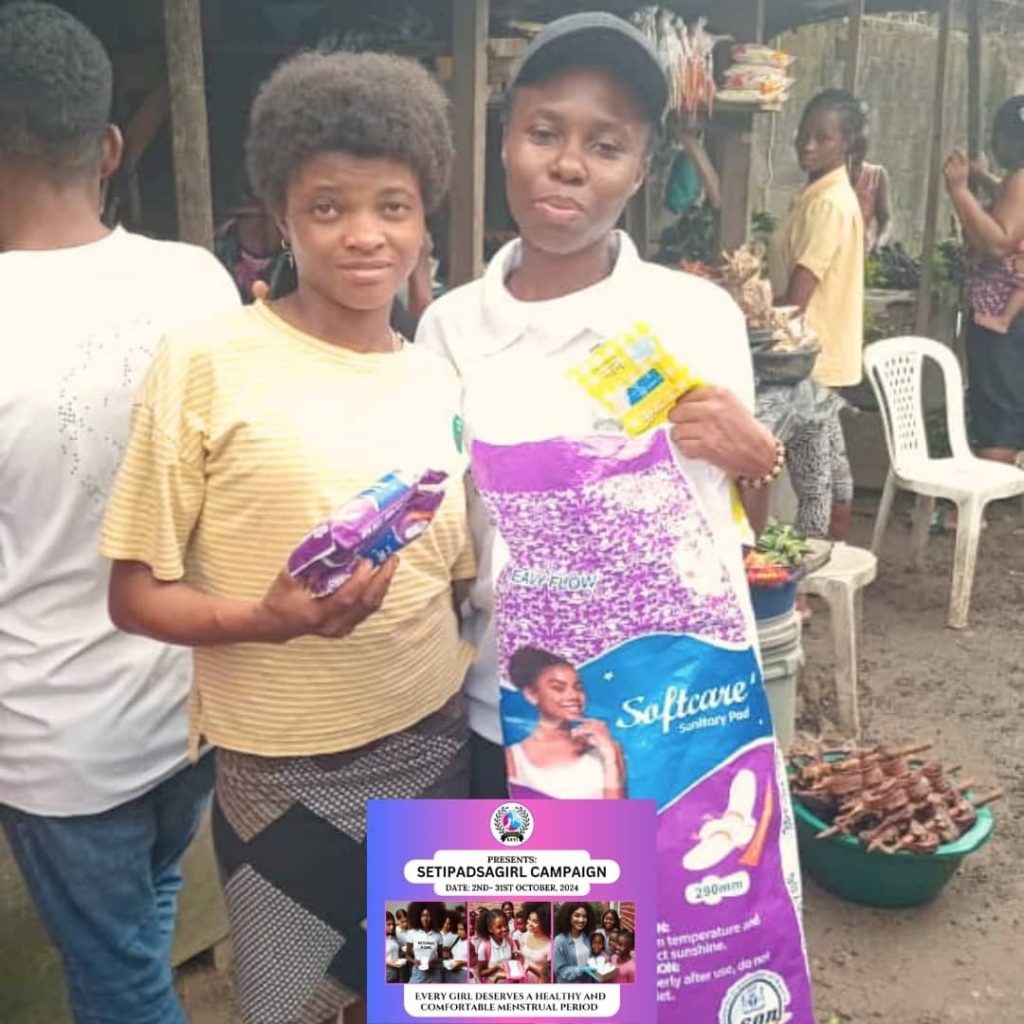
2. Sanitary Pad Distribution3
To ensure that “power is maximized,” the program provides the physical tools necessary for dignity:4
- Direct Provision: Handing out sanitary pads ensures that girls do not have to miss school and women do not have to pause their trading or work due to a lack of supplies.
- Affordability & Afforestation: By providing these items for free, SETI removes the financial burden that often forces girls to choose between buying food and buying pads, or worse, using unhygienic alternatives like old rags or newspapers.
The “Bridge” Effect
As previously mentioned education is the bridge. In the context of the Pad a Girl program:
Education is the bridge that closes the gap between biological vulnerability and social participation.
Key Benefits of the Program
| Benefit | Impact |
| Increased Attendance | Girls stay in school during their cycles, preventing them from falling behind their male peers. |
| Disease Prevention | Proper hygiene reduces the risk of reproductive tract infections (RTIs). |
| Economic Agency | Women in the marketplace can continue their trade without interruption, maintaining their financial independence. |
| Stigma Reduction | Openly discussing periods in public spaces like markets “normalizes” the conversation for the entire community. |
If you will like to donate or sponsor this initiative, please contact us at : setinitiative@yahoo.com
